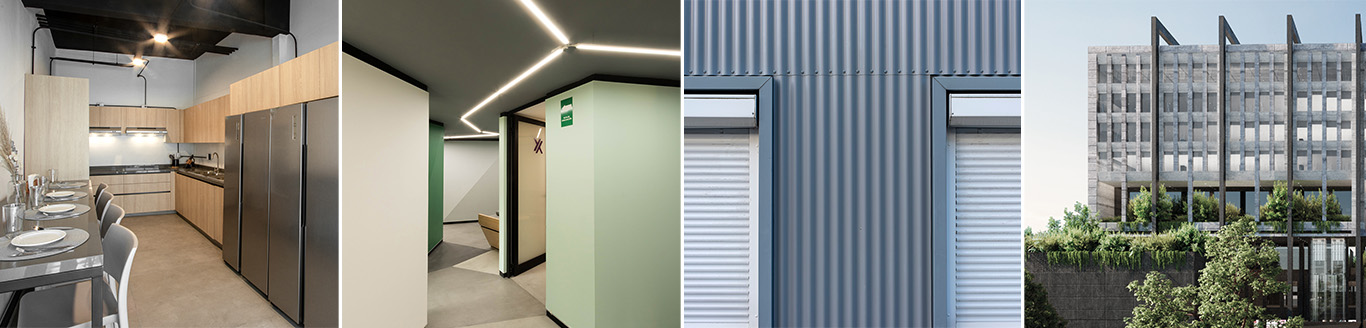
4 Real Estate Typologies with High Profitability Potential
Real estate profitability no longer depends solely on location or project size. Today, it is largely determined by a development’s ability to respond to new patterns of use, changes in urban living, and more flexible occupancy models. In this context, certain typologies have consistently demonstrated strong performance in terms of demand, occupancy, and returns. However, discussing profitability also requires considering the specific characteristics of each property in order to reach meaningful conclusions.
CoLiving is one of the models that best reflects recent transformations in the way people inhabit cities. It emerged as a response to increasingly mobile lifestyles, smaller household sizes, and the search for community within urban environments. Its structure combines private spaces with shared areas and integrated services, enabling operational efficiency while maintaining competitive occupancy levels. According to market analyses by CBRE Group, Inc., this segment has experienced sustained growth in cities facing high rental pressure and significant concentrations of young professionals.
Mixed-use developments respond to another major urban trend: the integration of multiple activities within a single location. By combining residential, retail, office, and service uses, these projects create more dynamic environments, reduce commuting needs, and diversify income streams. Beyond their appeal to users, mixed-use developments often offer greater resilience and adaptability to economic or market shifts, a characteristic that is increasingly valued in complex urban contexts.
Meanwhile, the leasing of medical office spaces has gained relevance due to the growth of private and specialized healthcare services. In certain locations, the steady demand for medical care can translate into stable occupancy rates and attractive rental income. Unlike other real estate products, their performance is often closely linked to the presence of complementary facilities, accessibility, and population density within their area of influence.
Personal storage facilities have also gained prominence in recent years. The rise of more compact housing, changing consumer habits, and the growth of small businesses have increased demand for spaces to store personal belongings and inventory. In addition to addressing an increasingly common urban need, this model offers the potential to generate recurring revenue through multiple lease agreements. According to the Mexico Self Storage Market report by IMARC Group, the self-storage market in Mexico continues to grow, driven by urbanization and the reduction of available residential space.
Although all of these typologies present attractive opportunities, none can be considered universally profitable. What works in one area may not be the best option in another, even when dealing with the same type of asset. Each typology responds to different urban, regulatory, and market conditions. For this reason, before defining a project, it is essential to understand which uses are most viable and which have the greatest potential to generate long-term value. In many cases, the answer is not the most obvious one or the one currently trending, but rather the one that emerges from a comprehensive understanding of a property's true potential and its urban context.
Projects you may be interested in: CoLiving Tabacalera, Neopraxis, Alta Plata