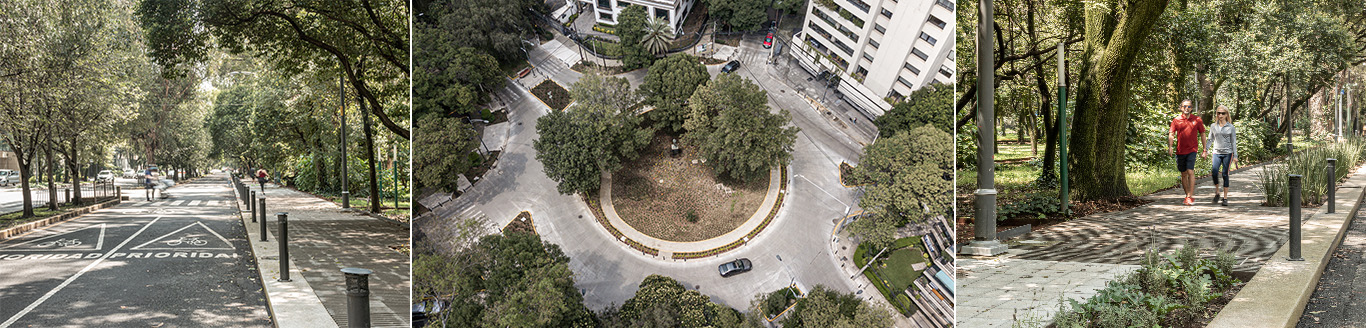
Public space as critical infrastructure in global cities
In the analysis of contemporary urban development, public space is recognized as a structural component of the urban system, with measurable impacts on social, economic, and environmental variables. Far from being a complementary element, it is a key infrastructure for the functioning of cities.
According to the U.S. Forest Service, urban public spaces “catalyze economic development, strengthen a sense of community, and improve quality of life” by concentrating social, recreational, and productive activities. This reinforces the idea that streets, parks, and plazas not only organize territory, but also structure complex urban dynamics.
The relationship between public space and health is also well documented. A study published in the International Journal of Environmental Research and Public Health indicates that investment in urban parks generates economic benefits associated with improvements in physical and mental health, including reduced sedentary behavior, lower pressure on healthcare systems, and enhanced well-being. Additionally, green public spaces help mitigate pollution, reduce urban heat islands, and decrease noise levels.
From an economic perspective, one of the most studied effects is its impact on real estate value. Research published in Land Use Policy shows that proximity to green spaces directly influences housing prices, with increases of up to 3.6% depending on distance. This phenomenon has been widely explained through econometric models, where the value of public space is capitalized into land prices.
Beyond value appreciation, public space also acts as an economic driver. By concentrating pedestrian flows, increasing dwell time, and facilitating social interaction, these spaces stimulate commerce, local consumption, and overall urban activity.
The evidence is consistent: the quality of public space directly influences public health, social cohesion, urban safety, real estate value, and economic activity. Conversely, its deterioration is associated with urban fragmentation and loss of territorial value.
In this context, understanding public space as critical infrastructure is not a theoretical stance, but a conclusion supported by evidence. Its design, investment, and management are key determinants of urban quality of life and of cities’ capacity to generate long-term value and resilience.
You might be interested in: Ruben Dario public park